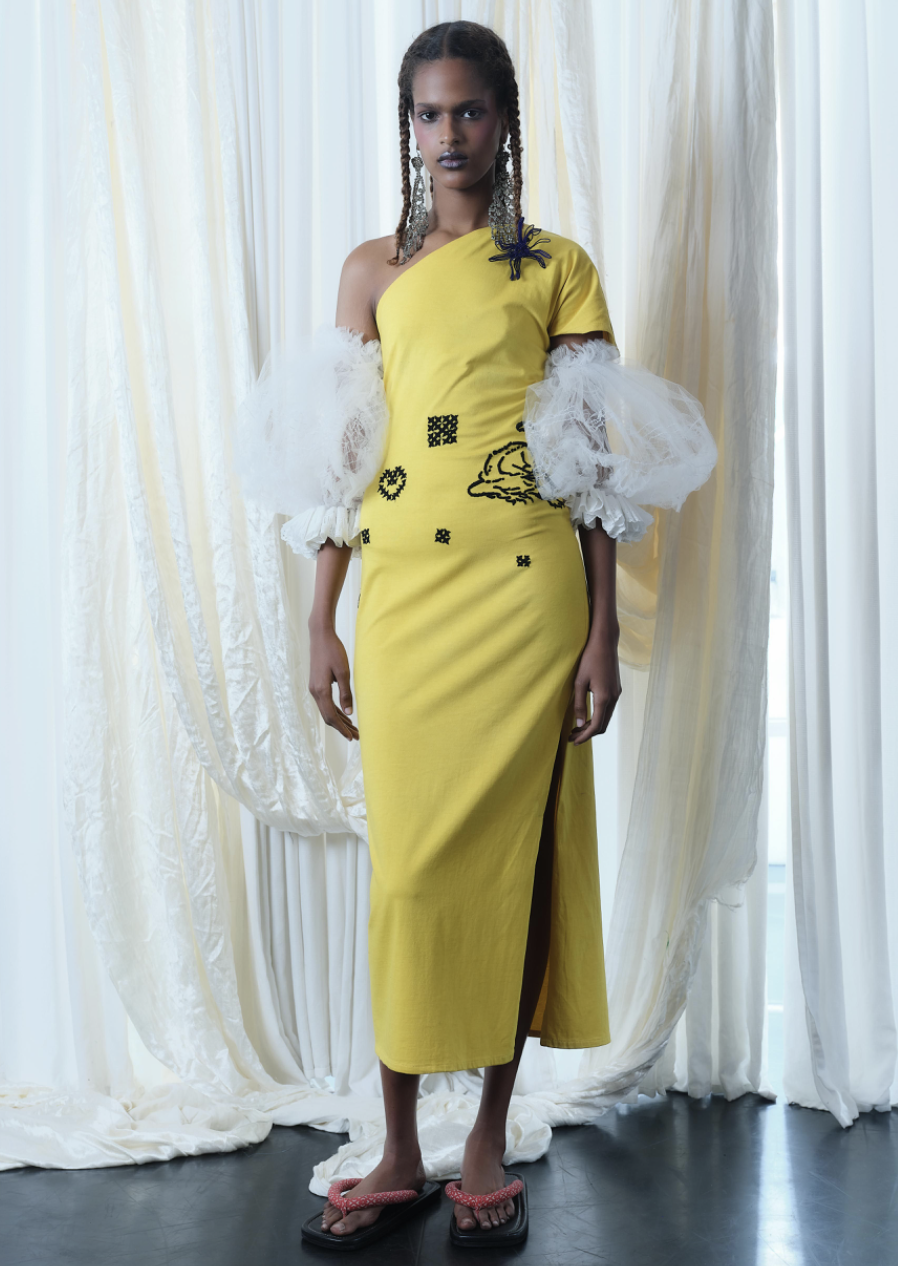
CUTWORK MOON ASYMMETRIC DRESS, BLACK/TEA STAIN
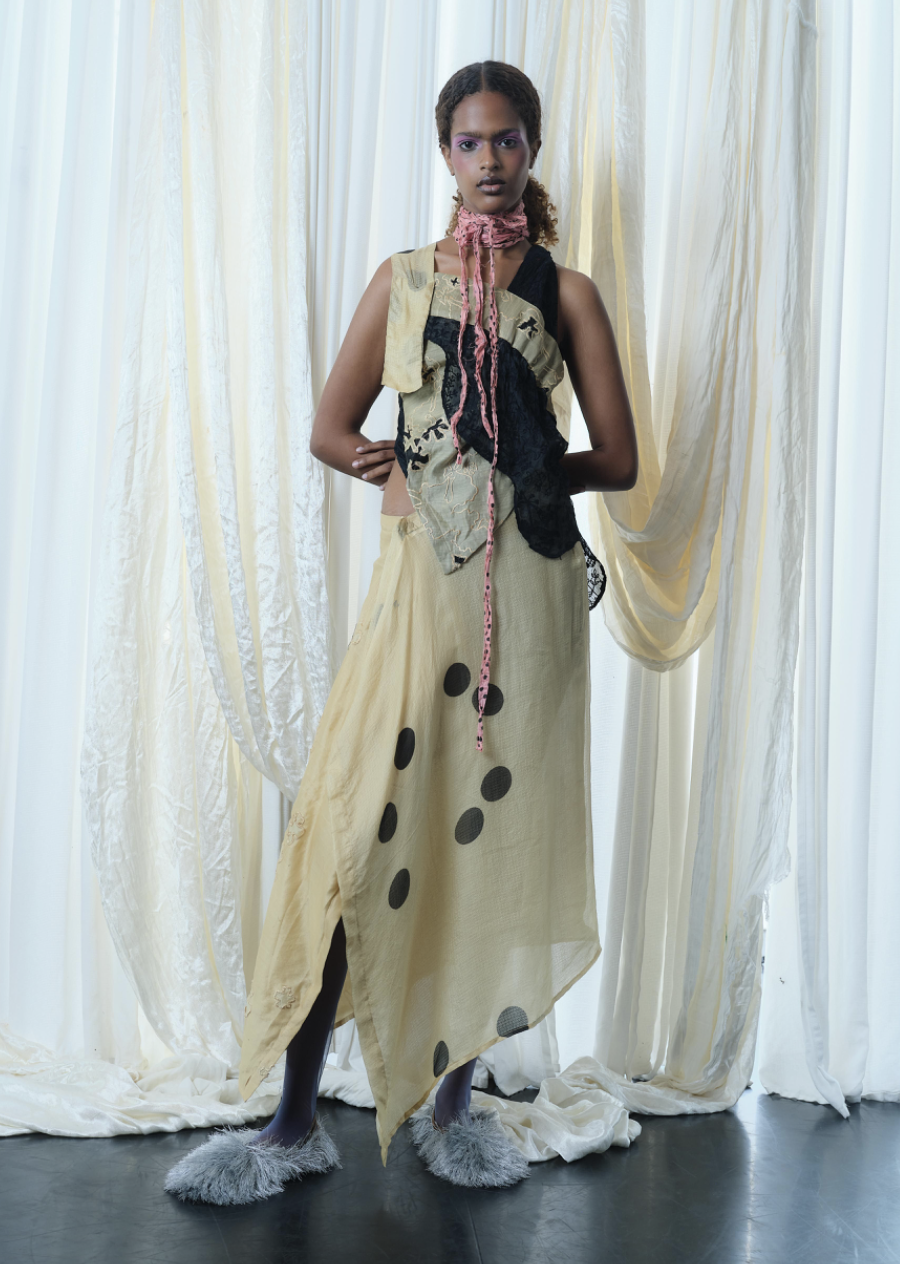
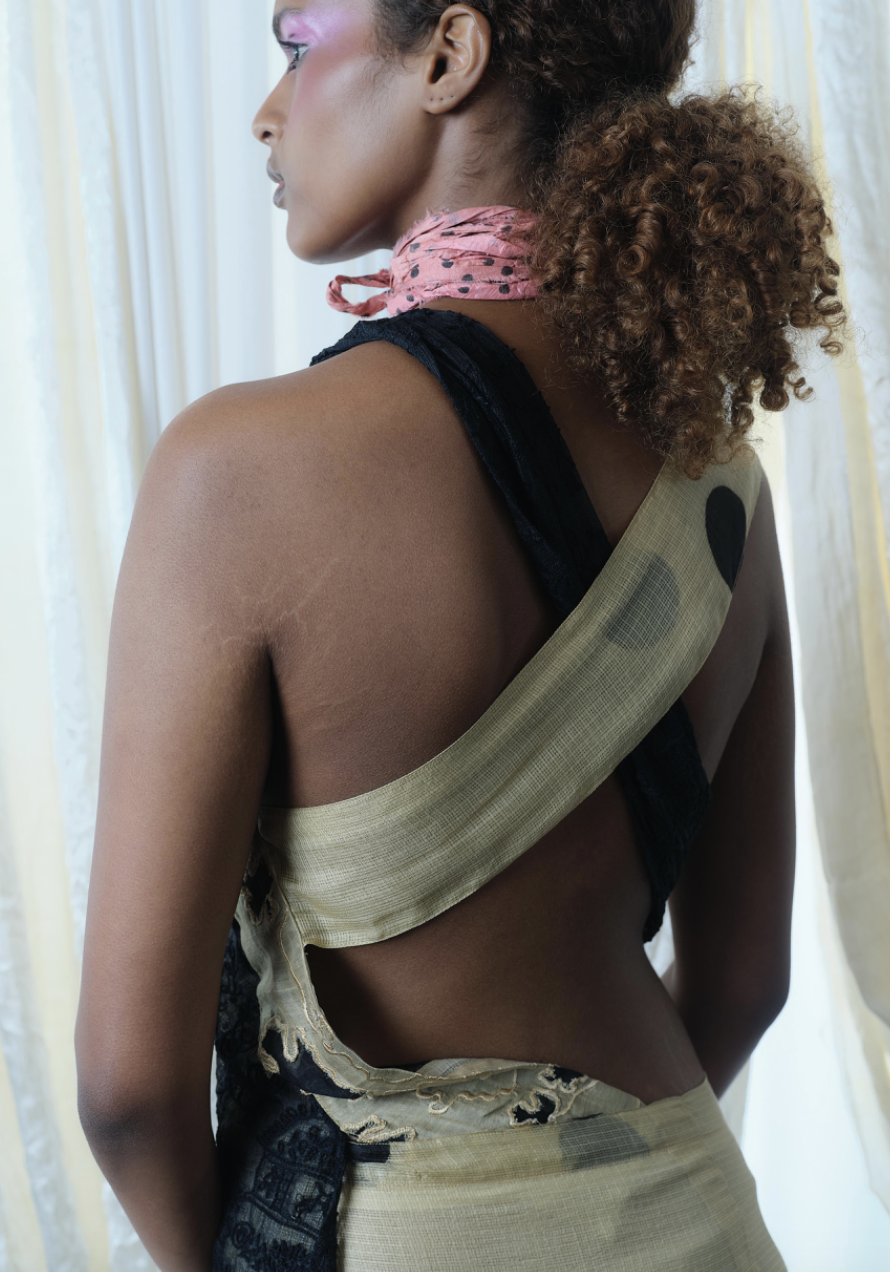
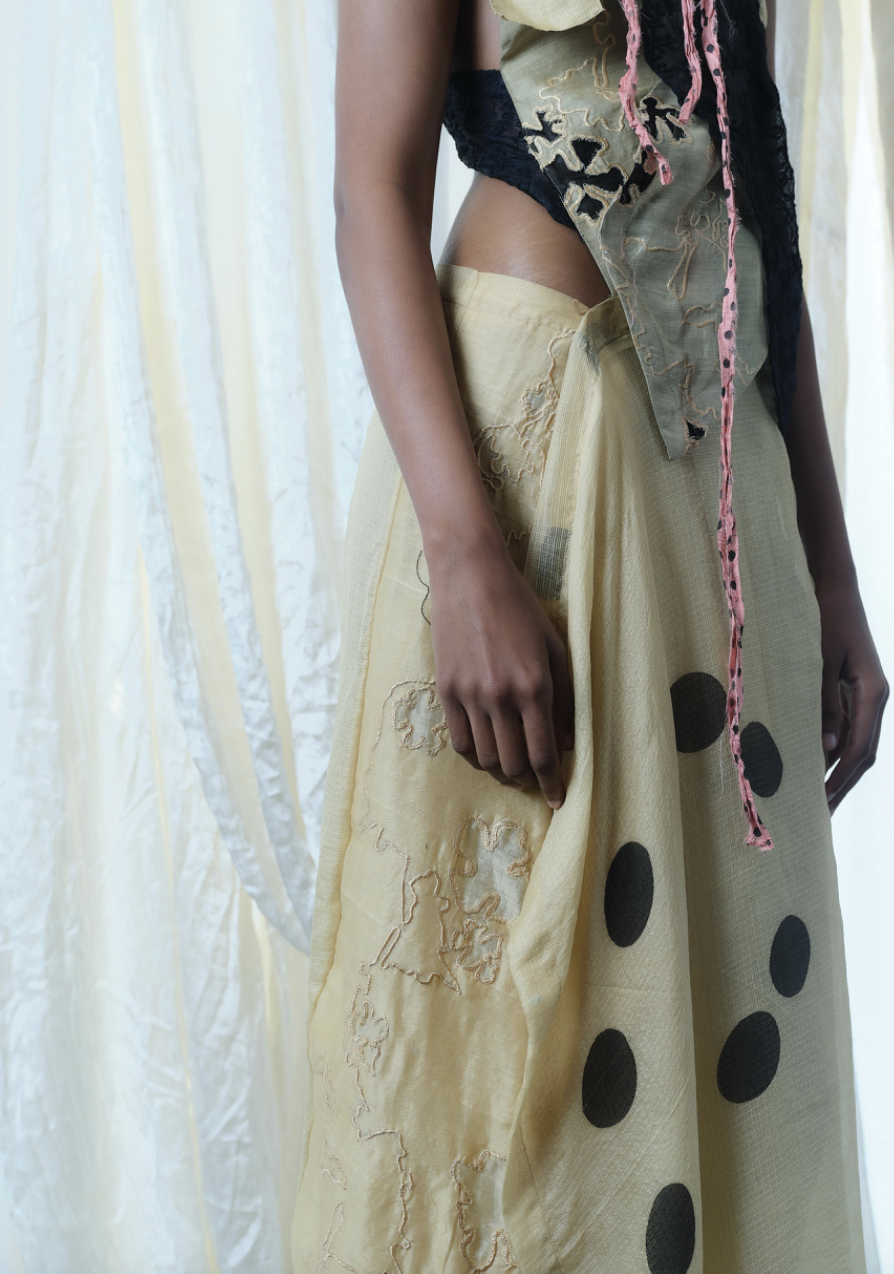
CUTWORK MOON ASYMMETRIC DRESS, BLACK/TEA STAIN
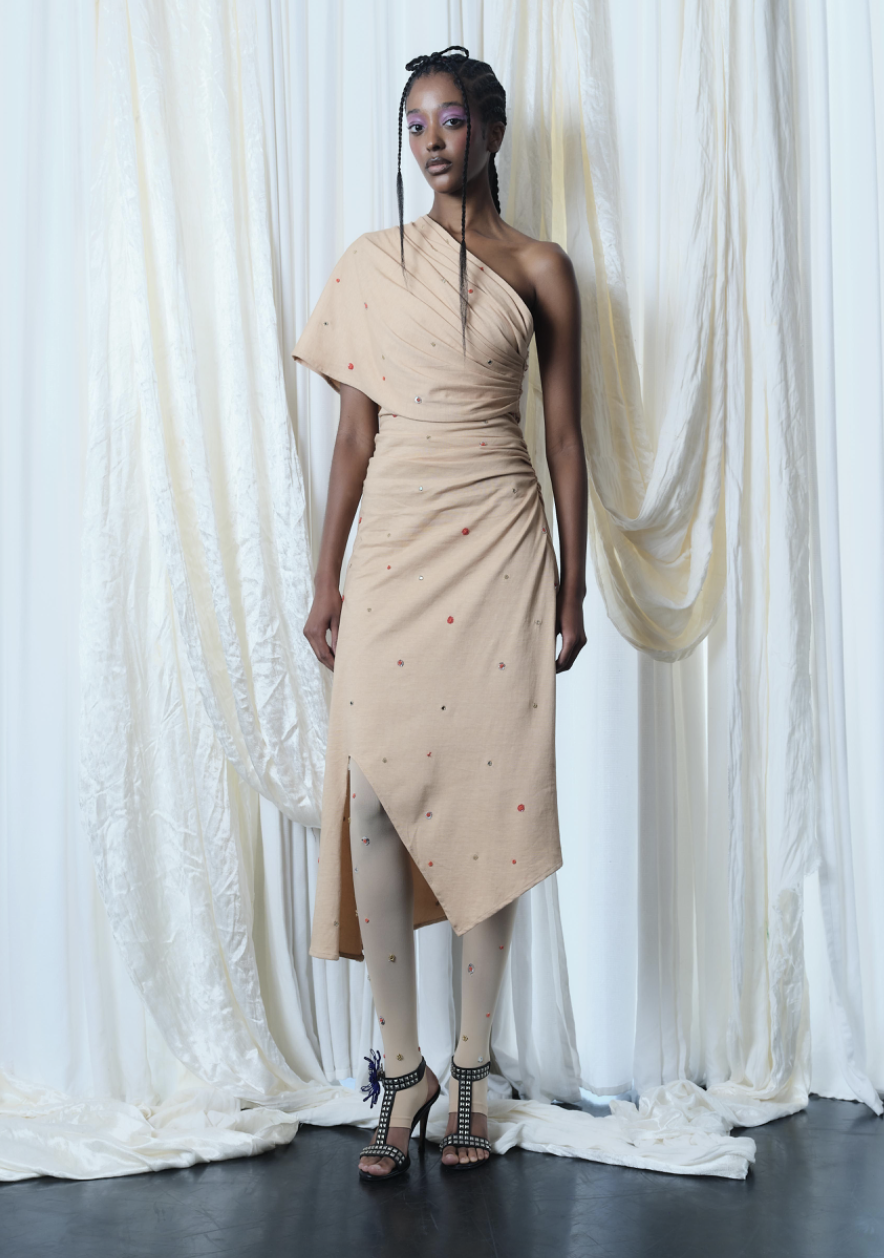
Silk kota is a diaphanous, graph-paper patterned textile made of tiny woven squares (khat) and hand-woven in pit looms in Kaithoon (near Kota) in Rajasthan, India. The textile is said to have originated in Mysore during the 17th century. Asymmetric dress with crossed back and diagonal hem, a combination of moon clamp dyeing, hand-embroidered warli, and hand-cut work.
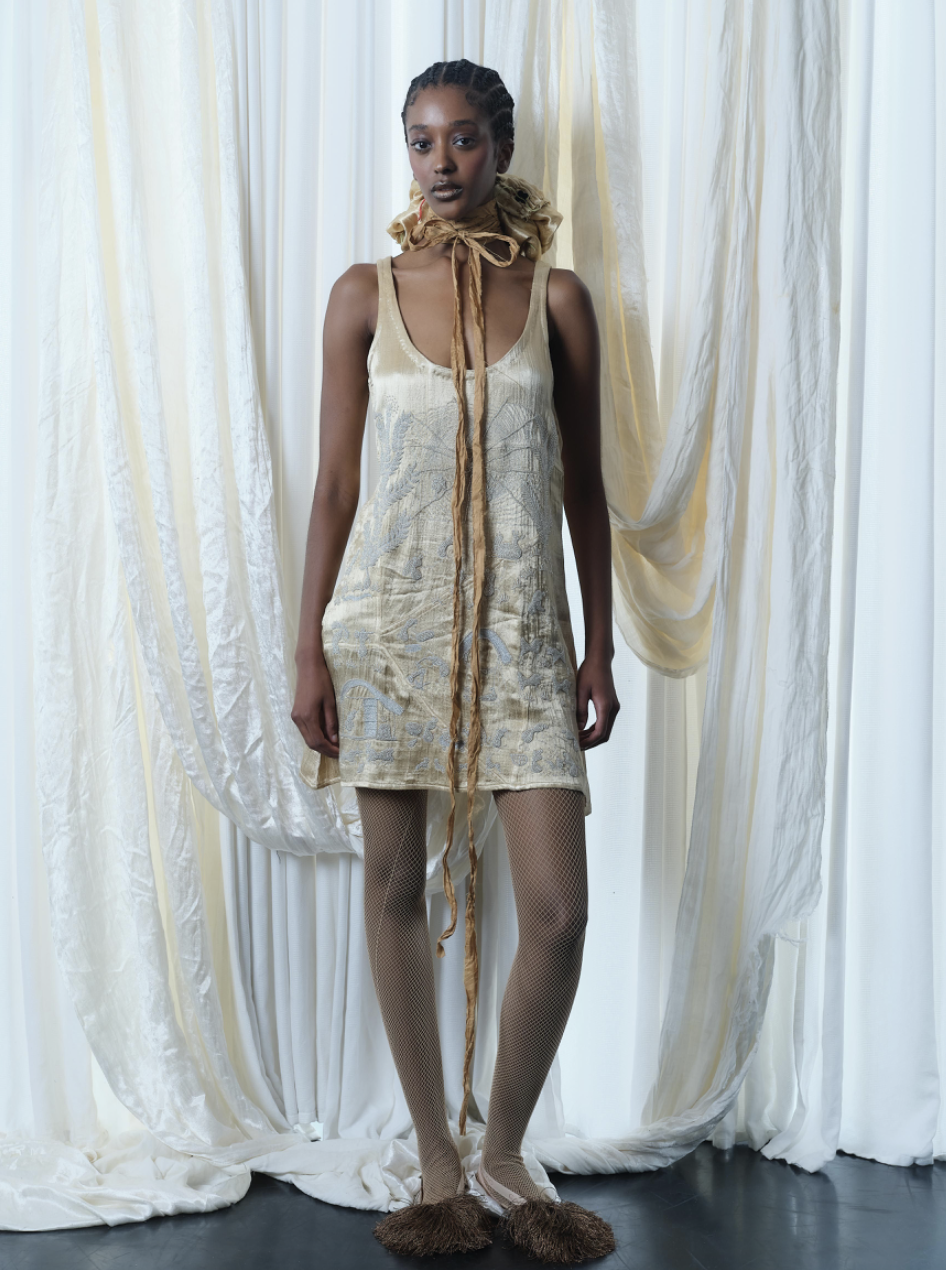
The art form of Warli originated as early as the 10th century and uses simple geometric motifs to depict community life, celebration and agrarian practices. Warli is a practice of storytelling through visual language and is most often seen in the form of painting, and originally using rice paste of mud walls - but seen here in the form of hand-embroidery work. .Warli has historical roots in Maharashta and Gujarat regions of India.
Made by hand in Gujarat
Dry clean only